
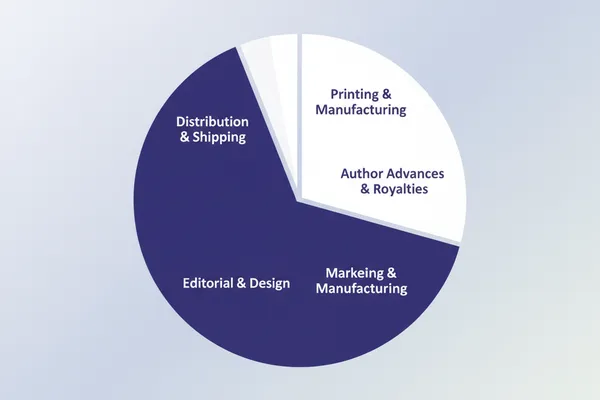
You have a manuscript and a dream of becoming a published author. But how much will it actually cost you to self-publish a book? The answer varies wildly depending on the path you choose. Traditional self-publishing through a vanity press or hybrid publisher can run anywhere from $5,000 to $50,000 or more. Meanwhile, digital-first approaches through platforms like Amazon KDP let you publish for literally $0 upfront.
In this comprehensive guide, we break down every cost category involved in self-publishing, reveal the hidden fees that catch first-time authors off guard, and show you how modern tools have made it possible to publish a professional-quality book without spending thousands of dollars.
The True Cost of Traditional Self-Publishing
When most people think of self-publishing, they picture the traditional route: hiring professionals for every step, printing physical copies, and getting their book into bookstores. Here is what that actually costs in 2026.
| Publishing Path | Typical Cost | What You Get |
|---|---|---|
| Full-service vanity press | $10,000 - $50,000+ | Editing, design, printing, limited distribution. Often poor ROI. |
| Hybrid publisher | $5,000 - $20,000 | Some editorial support, wider distribution than vanity press. |
| DIY with freelancers | $2,000 - $7,000 | You manage the project; hire individual professionals. |
| Print-on-Demand (KDP) | $0 upfront | No inventory risk. Printing cost deducted from each sale. |
| Ebook only (KDP) | $0 | Zero production cost. Up to 70% royalty. Global distribution. |
The difference between these paths is staggering. A first-time author spending $20,000 on a vanity press would need to sell thousands of copies just to break even, and the uncomfortable truth is that most self-published books through these services sell fewer than 250 copies. Meanwhile, an author who publishes an ebook through KDP starts earning royalties from the very first sale with zero financial risk.
Cost Breakdown by Category
Whether you go the traditional route or the budget-conscious path, it helps to understand what each piece of the publishing puzzle actually costs. Here is a detailed breakdown.
Editing: $500 - $5,000+
Professional editing is often cited as the single most important investment for a self-published book. There are several levels of editing, each with different price points:
- Developmental editing ($2,000 - $5,000): A developmental editor examines the big picture of your book. For fiction, they look at plot structure, character development, pacing, and narrative arc. For nonfiction, they evaluate argument structure, logical flow, and whether the content delivers on its promise. This is the most expensive type of editing, but it is also the most transformative. A good developmental editor can turn a mediocre manuscript into a compelling one.
- Copy editing ($1,000 - $3,000): Copy editors focus on sentence-level issues: grammar, punctuation, word choice, consistency, and style. They ensure your prose is clean and professional without changing your voice. For a 60,000-word manuscript, expect to pay around $0.02-$0.04 per word.
- Proofreading ($500 - $1,500): The final pass before publication. Proofreaders catch typos, formatting errors, and any remaining mistakes. This is the bare minimum editing any book should receive before going to market.
Can you skip editing entirely? Technically, yes. Many successful indie authors start with thorough self-editing and beta readers. If budget is a genuine constraint, proofreading alone can catch the most embarrassing errors while keeping costs under $500.
Cover Design: $200 - $2,500
The old saying "don't judge a book by its cover" is terrible advice for self-publishing. Readers absolutely judge books by their covers, especially online where your cover is a thumbnail competing against thousands of others. A professional cover is not optional if you want sales.
- Pre-made covers ($50 - $200): Designers sell pre-designed covers that you can customize with your title and author name. Quality varies enormously, but you can find solid options at sites that specialize in genre fiction covers.
- Custom cover design ($300 - $1,500): A designer creates a unique cover tailored to your book. For most self-published authors, this is the sweet spot of quality and affordability.
- Premium illustration or photography ($1,000 - $2,500+): If your book needs original artwork or a custom photoshoot, costs rise significantly. This level is typically reserved for authors with established sales records.
Interior Formatting: $100 - $1,000
Formatting transforms your Word document or text file into a properly laid-out book. For ebooks, this means creating a valid EPUB file with a functional table of contents, proper chapter breaks, and responsive text. For print books, it means setting margins, headers, page numbers, and typography.
- DIY formatting with free tools ($0): Tools like Sigil (for EPUB) or LibreOffice can produce acceptable results, but there is a steep learning curve.
- Professional formatting ($100 - $500): A formatter will take your manuscript and produce print-ready PDFs and/or EPUB files. Turnaround is usually one to two weeks.
- Premium tools like Vellum ($250 one-time): Mac-only software that produces beautiful ebook and print formatting. Popular among prolific indie authors.
Printing: $0 - $10,000+
This is where costs can spiral out of control. Traditional offset printing requires ordering hundreds or thousands of copies upfront:
- Offset printing (500-1,000 copies): $2,000 - $10,000 depending on page count, trim size, and paper quality. Per-unit cost is low ($2-$5 per book), but you are stuck with inventory.
- Print-on-Demand ($0 upfront): Services like Amazon KDP Print and IngramSpark print each copy as it is ordered. Per-unit cost is higher ($3-$8 per book), but there is zero inventory risk. The printing cost is deducted from your royalty automatically.
For first-time authors, print-on-demand is almost always the smarter choice. There is no financial risk, no boxes of unsold books in your garage, and you can update your interior files at any time.
Distribution: $0 - $3,000
Getting your book into readers' hands is the final piece of the puzzle:
- Amazon KDP ($0): Free distribution to all Amazon marketplaces worldwide. Your book appears alongside traditionally published titles.
- IngramSpark ($49 setup fee): Access to the Ingram distribution network, which supplies bookstores, libraries, and online retailers beyond Amazon.
- Vanity press "distribution packages" ($1,000 - $3,000): Many vanity presses charge thousands for "distribution" that amounts to little more than listing your book in an online catalog. Buyer beware.
Hidden Fees That Catch Authors Off Guard
Beyond the headline costs, self-publishing has a long tail of expenses that first-time authors rarely budget for. Being aware of these upfront can save you from unpleasant surprises.
- ISBN costs: In the US, a single ISBN from Bowker costs $125. A block of 10 costs $295. Amazon KDP provides a free ISBN, but it can only be used on Amazon. If you want wider distribution, you need your own.
- Copyright registration: Filing with the US Copyright Office costs $65-$85. Not strictly required (your work is copyrighted upon creation), but it provides legal advantages if someone infringes your work.
- Marketing and advertising: Many authors spend more on marketing than on producing the book itself. Amazon Ads, social media promotion, book blog tours, and review copies can easily run $500-$5,000 in the first year.
- Revision fees: If you discover errors after publication and need your formatter or designer to make changes, expect to pay $50-$200 per revision round.
- Author copies: Ordering physical copies of your own book for events or gifts. At print-on-demand rates, 50 copies might cost $150-$300.
- Tax obligations: Self-publishing income is taxable. If you earn significant royalties, you may need to make quarterly estimated tax payments and potentially hire a tax professional.
Watch out: "Hybrid publishers" and "author services companies" often bundle services at inflated prices. A $15,000 publishing package might include $3,000 worth of actual services. Always get itemized quotes and compare against freelancer rates before signing any contract.
The Ebook Revolution: Publishing for $0
The single biggest shift in publishing over the past decade has been the rise of ebook-first self-publishing. Platforms like Amazon Kindle Direct Publishing have made it possible for anyone to publish a professional ebook with zero upfront costs.
Here is why ebook publishing has become the default starting point for smart self-publishers:
- Zero production cost: There are no printing costs, no shipping, no warehousing. Your book exists as a digital file.
- No inventory risk: You cannot get stuck with unsold copies because there are no physical copies.
- Higher royalty rates: KDP offers 70% royalties on ebooks priced $2.99-$12.99, compared to the 5-15% typical of vanity press contracts.
- Instant global distribution: Your book is available in every Amazon marketplace worldwide within 24-72 hours of publishing.
- Free updates: Found a typo? Updated a statistic? You can upload a new version at any time, at no cost.
- Print-on-Demand as an add-on: Once your ebook is live, adding a paperback through KDP Print is free. Readers who prefer physical books can buy them, and each copy is printed on demand.
The ebook-first approach lets you validate your book idea with zero financial risk. If it sells well as an ebook, you can always invest in professional editing, a premium cover, and wider distribution later. Learn more in our complete guide to publishing on Amazon KDP.
How AI Is Changing the Cost Equation
The most significant development in self-publishing costs in recent years has been the emergence of AI-powered tools. Artificial intelligence is reducing or eliminating costs across multiple categories that once required expensive professionals or hours of manual work.
Consider the traditional self-publishing workflow and where AI fits in:
- Writing assistance: AI can help generate first drafts, overcome writer's block, and structure content. This does not replace human creativity, but it dramatically reduces the time from idea to manuscript.
- Editing support: AI-powered grammar and style checkers have become remarkably sophisticated, catching issues that would otherwise require a professional copy editor.
- Formatting automation: Converting a manuscript into a properly formatted EPUB used to require technical knowledge or paid software. AI tools can now handle this automatically.
- Cover generation: AI image generation tools can create professional-looking cover concepts, reducing the need for expensive graphic designers.
DraftZero takes this further by combining all of these capabilities into a single platform. You provide a title and concept, and the AI generates a complete, formatted book ready for publishing. The output includes properly structured EPUB files that can be uploaded directly to Amazon KDP or any other ebook retailer.
This is not about replacing human authors. It is about removing the financial barriers that prevent people from sharing their knowledge, stories, and ideas with the world. A subject matter expert who could never afford $10,000 for a vanity press can now create a professional ebook on their area of expertise and have it on Amazon within hours.
For more on how AI is changing book creation, see our guide on how to create an ebook with zero technical knowledge.
What Should You Actually Spend?
After reviewing all the costs above, here is our honest recommendation for first-time self-publishers in 2026:
- Start with an ebook ($0-$500). Use KDP for free publishing. Invest in a professional cover ($200-$500) if budget allows, as it is the single highest-ROI investment. Use AI tools or beta readers for editing.
- Add print-on-demand ($0 additional). Once your ebook is live, add a paperback through KDP Print. There is no extra cost; print expenses are deducted from each sale.
- Invest in marketing ($100-$500). Start with Amazon Ads at $5-$10/day. Track your return on ad spend and scale what works.
- Reinvest profits. If your book earns royalties, use that money to hire a professional editor for the second edition or fund your next book.
The bottom line: You do not need to spend $5,000 or $50,000 to self-publish a book in 2026. Start with ebook-first publishing at $0 upfront, use AI tools like DraftZero to streamline production, and invest your money in marketing once you know your book has an audience. The era of paying a vanity press thousands of dollars just to hold a copy of your own book is over.